
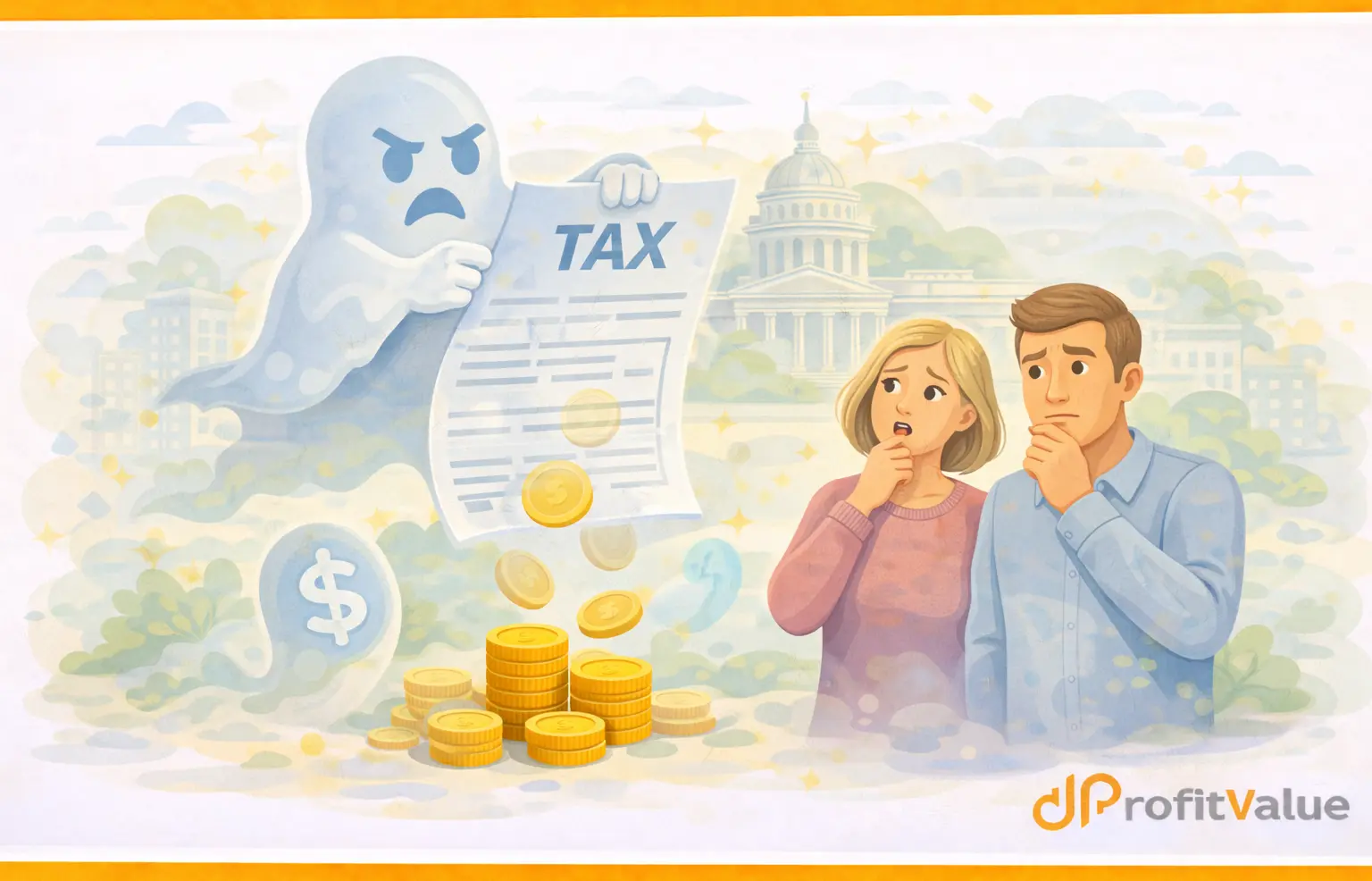
Have you ever been taxed on income that you didn’t actually receive? That’s what phantom tax feels like to many investors out there. Phantom tax refers to tax liabilities levied on income, gains or profits that are reported only on paper, but not yet received in cash.
This makes people feel like paying taxes without actually having the money for that. As unusual as the concepts sounds, it is pretty common in investments like partnerships, mutual funds and certain types of bonds.
This article will explain what is phantom tax, how it arises in real-world investment scenarios, and most importantly the tax implications for investors including how it can impact your overall income tax liability and even your expected refund.
What Is Phantom Tax? Tax Obligations For Investors
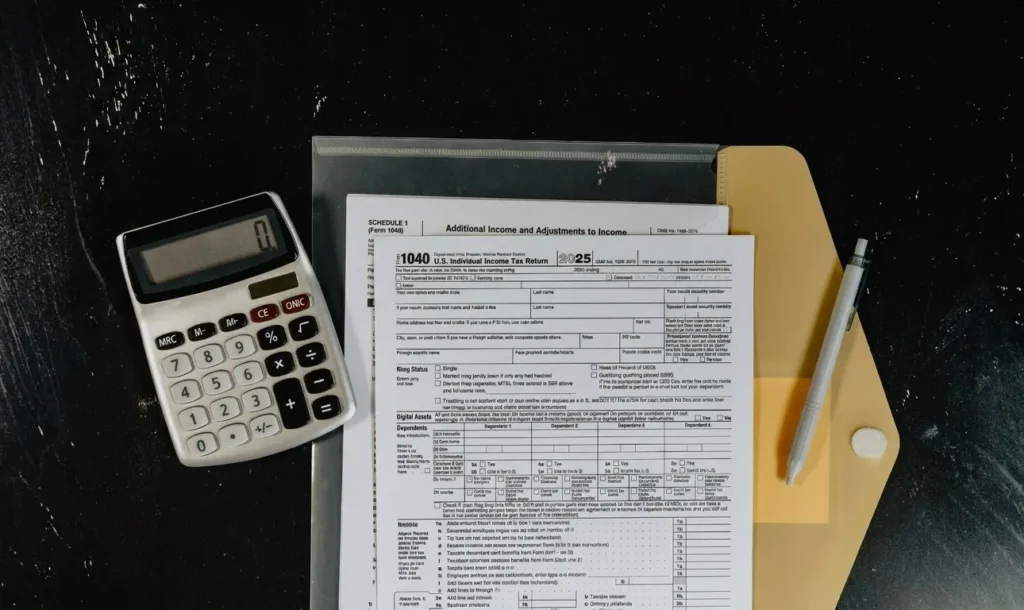
Phantom tax refers to a situation where you owe taxes on income that you haven’t actually received in cash. This happens because the IRS taxes certain types of income when they are earned or reported, not necessarily when they are paid out to you.
Phantom tax is often confused with phantom income, but they are two different concepts. Phantom income is the income reported for tax purposes that isn’t yet received in cash. Whereas, phantom tax is the tax you pay on that income. In simple terms, you may owe taxes on money that exists only on paper.
Why this happens?
US Tax system imposes phantom tax because tax regulations focus on recognized income or value appreciation rather than actual cash flow, requiring taxes to be paid on income that isn’t yet received in cash.
This is common in certain investments where:
- Earnings are reinvested instead of paid out
- Income is allocated to you (like in partnerships)
- Value increases are treated as taxable income
Example
Suppose that you invested in a partnership where your share of profit would be $5,000. But the partnership hasn’t yet paid out any cash to you. So, even though you received $0 in cash, the IRS treats that $5,000 amount as taxable income.
If your tax rate is 20%, then you would owe $1,000 in taxes out of your own pocket. This can sometimes create an unexpected tax burden for investors if they don’t understand the concept properly. After understanding what is phantom tax, let’s explore how it works step-by-step.
How Does Phantom Tax Work? Implications Of Phantom Income
To understand phantom tax clearly, you need to see how it actually happens behind the scenes. The key idea is that the IRS taxes economic income, not just cash you receive. In many cases, income becomes taxable when it is earned, allocated, or legally recognized, even if no money is paid out to you.
Higher taxable income from phantom income can reduce your expected refund or create a tax balance. In some cases, this may result in IRS updates like Tax Topic 151 if your refund is adjusted.
1. Investment or transaction creates phantom income
Your investment makes you eligible for income tax returns even if you never received any cash physically.
Examples
- Partnership earns profit but retains the cash
- Bonds accrue interest without paying it annually
- Mutual funds realize capital gains but reinvest them instead of paying you cash
- Debt is forgiven (which counts as income)
Even if you don’t receive money, these are treated as real gains for tax purposes.
2. IRS considers it taxable income
US Tax system imposes income taxes in two conditions. One, you either received the cash in hand. Or, you have a right to it, but not yet received it. This means that income can be taxable even if you didn’t physically receive it.
3. Income is reported to you (and the IRS)
You will usually receive forms such as:
- Schedule K-1 → Partnerships / LLC income
- Form 1099-DIV → Dividends and capital gains distributions
- Form 1099-OID → Original issue discount (bond interest)
- Form 1099-C → Canceled debt
These forms report income for tax purposes that must be included in your tax returns.
4. You include it in your tax return
Your taxable income includes some portion of this income, even if no cash was received yet. As a result, your taxable income increases. Taxpayers might move into a higher tax bracket and your overall tax bill rises.
5. You pay taxes out of your pocket
This is where phantom tax can be an issue for taxpayers, especially in tax season. You didn’t receive any cash, yet you pay taxes on the income that exists only on paper. Taxpayers are then required to pay these taxes using their savings or other income sources to avoid issues with IRS.
Example
- Mutual fund reports: $3,000 in capital gains (reinvested)
- Cash received: $0
- Tax rate: 20%
You still owe $600 in taxes, even though you didn’t receive any cash payout.
After understanding how it works, let’s explore the most common phantom tax scenarios for investors.
Common Phantom Tax Scenarios For Investors
Phantom tax is imposed on specific types of income sources that are considered taxable by the IRS even if no cash was phyically received. Understanding these phantom income scenarios is essential for investors to avoid unexpected tax liabilities.
1. Partnership and LLC Income (Schedule K-1)
When you invest in a partnership or LLC, you are not directly earning a fixed monthly salary or fixed returns. Instead, your investment makes you the co-owner of that business, and your share of profits is allocated to you, even if you never receive cash.
How the process works?
First, you invest your capital into a partnership or an LLC firm. The company then uses this capital for investment or operations. Over time, the business earns profit in the current year. Instead of allocating all the cash to investors, it may retain earnings for growth.
The partnership then reports your share of income to the IRS for taxation purposes. You also receive a Schedule K-1 form showing your allocated income. IRS receives the same information directly. Even if you didn’t receive any cash, your share of profits is treated as taxable income. You must report it on your personal tax return.
2. Mutual Fund Capital Gains Distributions
Mutual funds pool money from investors and actively buy and sell assets like stocks. When the fund sells an asset at a profit, it generates a capital gain, even if you didn’t personally sell anything.
How the process works?
First, you invest your capital in a mutual fund where your money is pooled with other investors. Then, fund managers buy/sell securities. As a result, Profits from sales create capital gains distributions. The fund distributes gains to investors. Over time, these are automatically reinvested instead cash distributions.
Even if reinvested, these gains are taxable. You must report them in the year they are realized by the fund.
3. Zero-Coupon Bonds (Original Issue Discount- OID)
Zero-Coupon bonds don’t pay periodic interest. Instead, they are purchased at a discounted price and mature at full value. Over time, the interest gradually accumulates, but is not paid out annually.
How the process works?
You buy a bond at a discounted price (e.g: $700 for a $1000 bond). The bond increases in value every year. This increase is called Original Issue Discount (OID). The issuing institution annual accumulated interest. You may receive Form 1099-OID
As a result, you are requiredd to pay potential taxes on annually on the accrued interest even when no cash is received. Basically, you are taxed on the built-up interest of the bonds before receiving any actual payout.
4. Treasury Inflation-Protected Securities (TIPS)
TIPS are government bonds that adjust based on inflation. Due to inflation, the actual value of your bond rises more than the original value. Therefore, you are taxed on the principal value of that bond even if you didn’t receive any cash in hand.
How the process works?
You buy TIPS from US Treasury. The value of the bond adjusts according to the inflation (e.g: $1000 bond becomes $1050 due to inflation). The increase is reported as taxable income annually.
As a result, you must pay taxes based on inflation adjustments each year. Interest income may also be taxed separately.
5. Forgiven debt (canceled debt income)
When a lender cancels part or all of your debt, the IRS treats that canceled amount as taxable income, even though you weren’t paid any cash.
How the process works?
Suppose, you owe money on a loan or credit account. Lender forgives some or all of your debt (e.g: $1000 debt reduced to $0). You receive Form 1099-C (cancellation of debt). IRS receives this information directly through this form.
This forgiven amount makes you liable for taxes even when you didn’t receive any kind of payment. You must include it in your tax return.
6. Employee Stock Compensation (Restricted Stock & Options)
Many companies offer stock options to their employees instead of cash bonuses as an incentive. These options can result in unexpected tax liabilities when they vest or are exercised, even if the shares were not sold.
How the process works?
Your company provides you stocks or options. They become yours after a certain period. At this point, it becomes taxable. Employer reports its value as income on forms like W-2 or 1099 depending on the structure.
As a result, you may owe taxes on income not yet received from the stocks. Keep in mind, you can owe tax on stock value you haven’t converted into cash. After understanding the common scenarios where phantom tax might incur, let’s explore legal ways to avoid phantom tax or reduce it.
Legal strategies to avoid phantom tax
To avoid paying taxes on income that you haven’t actually received, let’s explore these legal approaches to manage phantom income better than other investors out there.
1. Tax-advantaged accounts
Using a tax-advantaged account such as an IRA or 401(k) to manage certain REITs, mutual funds or other types of similar investments is an effective legal way to defer or eliminate taxes on annual distributions.
Example
Imagine you invest in an REIT company that generates significant dividends each year. If you hold them in a standard brokerage account, the dividends will be taxable annually, even if you reinvest them. By holding the REIT in a Roth IRA, those distributions are shielded from immediate taxation.
2. Implement tax-distribution clauses in business agreements
Owners of certain LLCs, partnerships and S-Corps can be expected to pay taxes when the business reports a profit even if the company doesn’t distribute enough cash to cover those tax bills.
Example
You own 25% of an LLC that generates $400k in taxable income where your share of the profit is $100,000. Even if the company keeps that cash to buy new equipment, the IRS expects you to pay tax on that $100,000.
This can be solved by drafting a tax distribution clause in your business agreement that mandates the company to distribute enough cash flow to cover the owners’ estimated liabilities.
3. Manage year-end mutual funds distributions
Mutual funds are required by law to pass net capital gains to shareholders. If a fund manager sells stocks at a profit within the fund, you may receive a “Capital Gains Distribution” in December, even if the value of the fund decreased during the year.
Example
You buy shares of a mutual fund in November. In December, the fund pays out a large capital gain distribution. You are now taxed on the growth of the fund achieved before you even owned it.
It is recommended to check the official website of the fund for estimated year-end distributions. Avoid buying immediately before the Ex-Dividend date.
4. Account for OID on Bonds
Zero-coupon bonds are sold at a discount and do not pay annual interest. However, the IRS requires you to report a portion of the “discount” as interest income every year you hold the bond.
Consider using U.S. Savings Bonds (Series EE or I), which allow you to defer reporting the interest until the bond is cashed or reaches maturity.
5. Utilizing exclusions for forgiven debt
When a lender forgives some portion or all of your debt, then the forgiven amount is taxable by the IRS. This often surprises people who are already in financial distress and now face a tax bill on money they never technically “received.”
Check if you qualify for the Insolvency Exclusion. If your total liabilities exceed your total assets at the time of the debt cancellation, you may not have to pay taxes on the forgiven amount. Use IRS Form 982 to claim this.
6. Optimizing employee stock options
Employee compensation in the form of restricted stocks or stock options can result in additional tax liabilities. For unvested restricted stock, consider filing an 83(b) Election within 30 days of the grant.
This allows you to pay taxes on the value today (when it is likely lower) rather than when it vests in the future. For Incentive Stock Options (ISOs), monitor your Alternative Minimum Tax (AMT) exposure closely.
7. Consult a tax professional
If financial planning is hectic for you, then consider working with a tax professional. They help you make the most out of your investments while keeping you below taxable income. Whether you are a business owner or an investor, seeking expert advice from a tax professional can maximize your earnings and minimize your potential tax liabilities.
Conclusion
This article has thoroughly explained what is phantom tax, why does it exist, common scenarios where investors are taxed on unrealized gains and strategies to mitigate these liabilities. Phantom tax is a tax on income that isn’t received in cash yet.
This can result in unexpected tax surprises for investors who haven’t learned about the concept. Consequently, your returns can become complicated due to investment income. This can cause unexpected delays in your refund. Learn more about it in our guide on Tax Topic 152.
Some of the most common scenarios of phantom tax are zero-coupon bonds, TIPS, LLC or an S-Corp, forgiven debt and employee stock compensation. By understanding how to mitigate potential liabilities in these cases, you can maximize your earnings and stay in low tax brackets. Do you have any questions? Let us know in the comments.
FAQs
What is phantom tax?
Phantom tax is the tax you pay on income you did not actually receive in cash, but is still considered taxable by the IRS.
What is the difference between phantom income and phantom tax?
Phantom income is the paper income reported for tax purposes, while phantom tax is the tax you owe on that income.
Why does phantom tax happen?
It happens because the IRS taxes income when it is earned or recognized, not necessarily when it is paid out to you.
What are common sources of phantom income?
Common sources include:
- Partnership or LLC income (K-1)
- Reinvested capital gains from mutual funds
- Zero-coupon bonds (OID)
- TIPS inflation adjustments
- Forgiven debt
Do I have to pay tax even if I didn’t receive money?
Yes. If the income is reported to the IRS, you are generally required to pay tax on it, even without receiving cash.